The difference between an accessible group trip and an inaccessible one is usually not the vehicle. It is the point in the planning process at which accessibility was considered.
Groups that establish mobility requirements at the outset — before the destination is chosen, before the itinerary is built, before the bus is booked — end up with a day that works for everyone. Groups that finalize the plan and then ask whether it can be adapted end up with a participant sitting out, or a workaround that visibly separates one person from the rest of the group.
Ontario's Accessibility for Ontarians with Disabilities Act sets standards for transportation providers, and the practical implications for group charter work are specific.
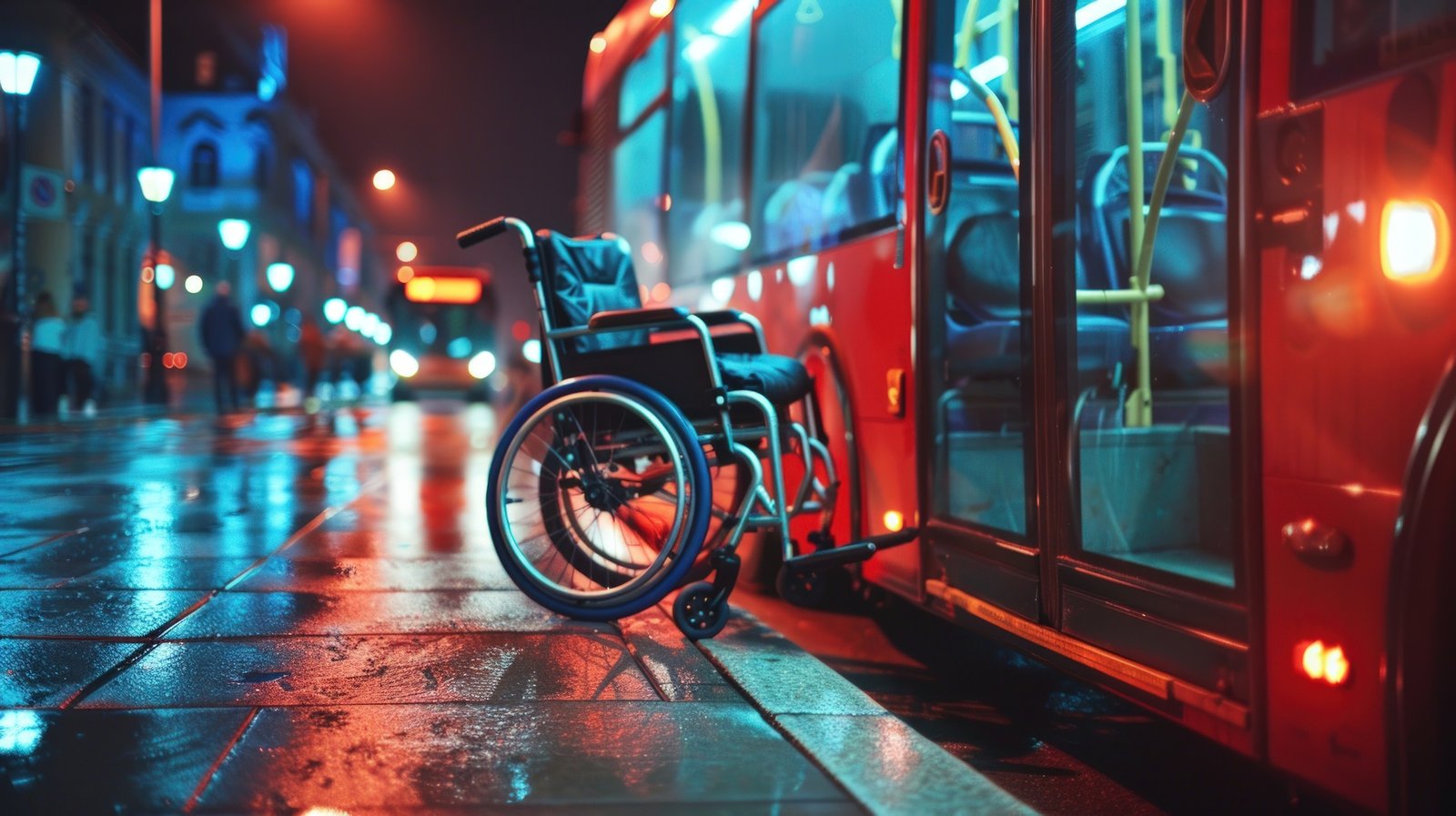
A wheelchair-accessible coach or minibus is equipped with either a hydraulic lift or a ramp, along with securement systems that anchor a mobility device to the vehicle floor and an occupant restraint for the passenger. The securement positions occupy floor space that would otherwise hold seats, which means an accessible vehicle carries fewer ambulatory passengers than the same vehicle in standard configuration.
That trade-off is the single most important planning fact. A group of forty-five with two wheelchair users does not fit on a forty-seven-seat coach configured for accessibility. The vehicle sizing conversation has to happen with the mobility requirements already known.
The questions that determine what vehicle is required are more granular than most organizers expect, and gathering the answers early prevents an uncomfortable discovery on the morning of the trip.
How many participants use a mobility device, and what type — manual wheelchair, power wheelchair, scooter? Power chairs and scooters are significantly heavier and larger than manual chairs, and lift weight capacity is a real limit rather than a theoretical one. What are the device dimensions? Can the participant transfer to a coach seat, and do they want to? Transferring is a personal choice, not something an organizer should assume either way.
Are there participants who do not use a mobility device but have limited stair mobility? This is a large and frequently overlooked category. Someone who walks with a cane may manage a coach's steep entry steps with difficulty, or not at all. A vehicle with a lift serves them as well, and knowing about it changes the vehicle choice.
Are there participants with service animals, sensory sensitivities, or medical equipment that travels with them? Each has implications for seating and space.
An accessible bus that arrives at an inaccessible destination has solved nothing. Verifying the destination is a separate exercise and one that generic accessibility claims on a website do not settle.
Specific things to confirm: Is there a level or ramped route from where a bus can legally stop to the entrance? Not from the parking lot — from where the bus can actually pull up. Are the washrooms accessible, and how far are they from where the group will spend its time? Is there accessible seating at any performance or presentation, and is it located where the group can sit together? Are pathways paved, and if the destination is outdoors, what is the surface? Gravel, grass, and packed earth are meaningfully different from pavement for a manual chair user.
Calling the venue and speaking to someone who has walked the route produces better information than reading an accessibility page.
Lift boarding takes time — realistically three to five minutes per passenger including securement. For a group with three wheelchair users, that is fifteen minutes added at each end of the trip and at every intermediate stop.
Building that time into the schedule matters for a practical reason and a human one. Practically, a schedule that does not account for it runs late. Humanly, a group standing around waiting while one participant is boarded under time pressure is an experience that participant will not enjoy and did not ask for. Boarding wheelchair users first, before the general group loads, is both more efficient and considerably more comfortable for everyone.
Lift operation and securement are trained skills. A driver who is confident with the equipment completes the process smoothly and can answer a passenger's questions about how their chair will be anchored. A driver improvising with unfamiliar equipment is slow, and the passenger can tell.
Transnet Canada assigns drivers trained on accessible equipment to accessible bookings as a matter of course, and organizers are welcome to confirm this when the booking is made.
Accessible vehicles represent a smaller share of any operator's fleet than standard coaches, which means availability is genuinely tighter. Groups requiring accessible transportation should book earlier than they would otherwise — several weeks ahead for a typical outing, and considerably longer for peak season dates.
Contact Transnet Canada with your group size, the number and type of mobility devices involved, and your destination, and we will confirm the appropriate vehicle configuration and work through the destination access questions alongside you.