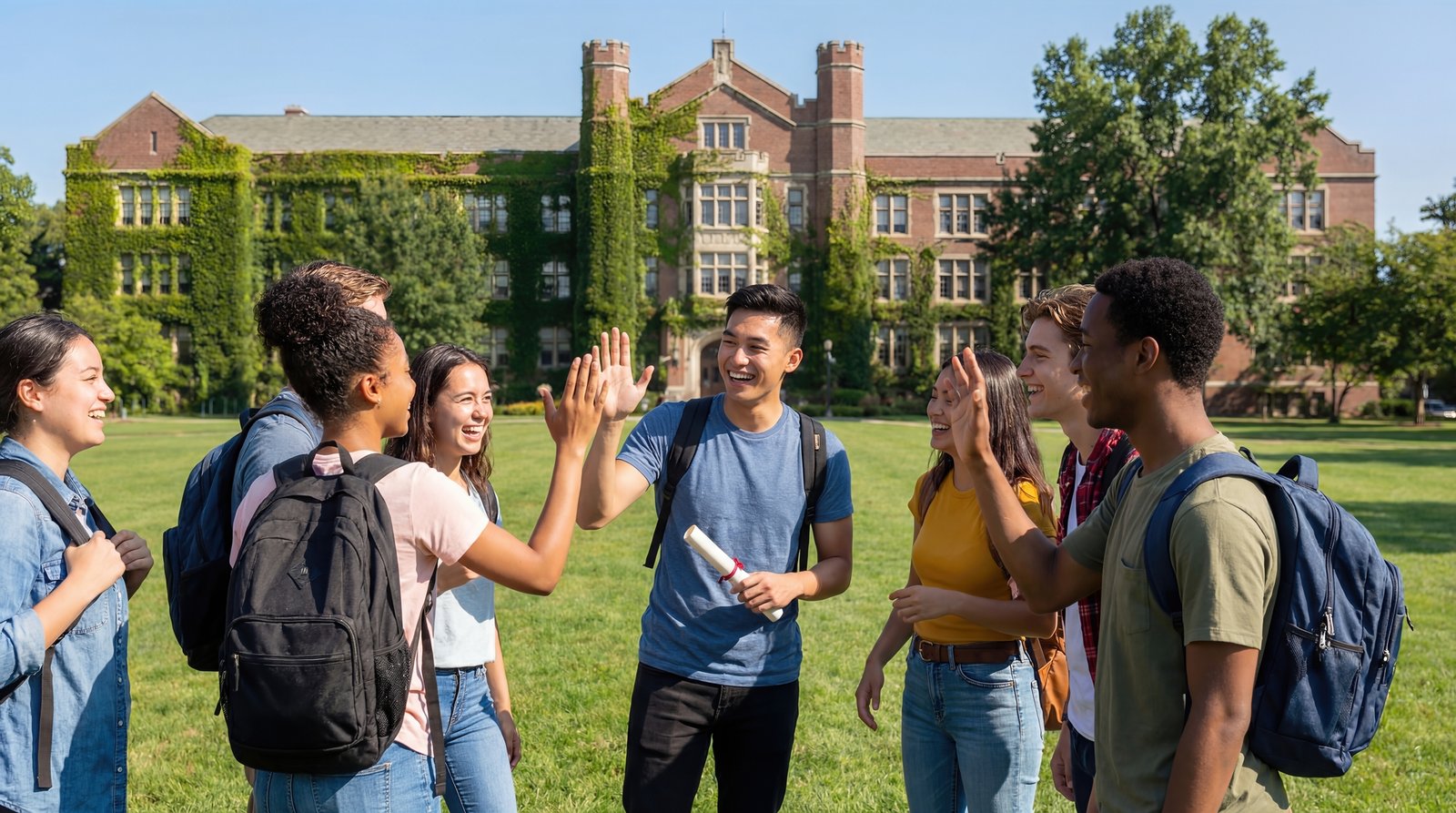
University and college students in Ontario have a transportation problem that is somewhat specific to their situation. As a group, they are highly mobile, socially organized, budget-conscious, and regularly attempting to move large numbers of people to places that public transit does not conveniently serve. Student clubs plan day trips. Athletic teams travel to competitions. Academic departments organize field trips. Orientation programs move hundreds of incoming students between venues. Residence councils plan social outings.
All of these activities benefit from organized group transportation, and charter buses fit the specific needs of post-secondary student groups in ways that are worth understanding properly.
Campus clubs at Ontario universities and colleges organize a remarkable range of off-campus activities. Outdoor and adventure clubs plan hikes, camping trips, and conservation area visits. Cultural clubs organize visits to cultural events, festivals, and community gatherings across the GTA. Academic clubs in law, business, engineering, and health sciences organize site visits, competitions, and conferences at other campuses. Volunteer clubs coordinate group participation in community events, charity runs, and outreach programs.
The common challenge is getting a group of twenty to fifty students to a location that is either too far from campus to walk or too spread across the city to coordinate by transit. A charter bus that picks up at a campus loading zone and delivers the group to the destination handles this in a way that rideshares cannot scale to and public transit cannot serve directly.
Budget is always a consideration for student groups. The per-person cost of a charter bus trip, when organized through a student association with proper advance booking, is often comparable to or less than transit costs for the same trip with the same group, particularly once transfer complexity and wait times are factored in. Student association treasurers who have done this comparison are often surprised to find the bus is more economical per person than the TTC and connecting routes for groups above a certain threshold.
Field trips at the post-secondary level are substantively different from K-12 excursions in their educational purposes but operationally similar in their transportation requirements. Environmental science classes visit monitoring stations, field sites, and natural areas. Architecture students travel to buildings, urban sites, and projects. Nursing and health science programs visit clinical and community health facilities. Geography and urban studies classes tour neighborhoods, infrastructure, and planning projects. Business programs visit companies and facilities.
These trips are academic programming, and the transportation serves an educational purpose. The same considerations that apply to school field trips — licensed operators, appropriate insurance, driver background checks — apply to post-secondary field trips, and Transnet Canada meets all of them as standard.
For Ontario universities and colleges with procurement requirements for vendor approval, Transnet Canada's operational documentation and compliance record with Ontario commercial vehicle regulations is available to support procurement processes. Academic departments that have established relationships with approved charter providers have a simpler path to organizing field trips than those dealing with vendor approval from scratch each time.
University and college athletic programs in Ontario travel extensively through conference play. OUA (Ontario University Athletics) and OCAA (Ontario Colleges Athletic Association) competitions take teams across the province, with some conferences spanning the full geographic range from Windsor to Ottawa. Basketball teams, volleyball teams, soccer teams, wrestling programs, and rugby clubs all require transportation to away games and provincial championships.
Athletic travel by charter bus is the standard at the varsity level for good reasons. Teams travel together, which maintains the team environment that coaches value in the days and hours before competition. Equipment travels with the team. The schedule is controlled. And the cost, spread across a roster of athletes, coaching staff, and support personnel, is manageable within athletic department budgets in ways that individual travel reimbursement is not.
Orientation week at Ontario universities and colleges involves moving large numbers of incoming students — sometimes hundreds at a time — between campus locations, off-campus events, and venues that student governments and administration use for programming. The logistics of these movements, particularly when they involve students who are new to the campus and new to the city, benefit significantly from coordinated charter transportation.
Orientation week charters are also one of the highest-visibility transportation bookings a campus can make, because the incoming students are forming their initial impressions of the institution. Professional, coordinated bus transportation contributes to an orientation experience that feels organized and cared-for, which is the impression every institution wants new students to have.
Student clubs and organizations booking charter buses for the first time often have questions about the process, since it is somewhat different from booking through a commercial app or a transit system. Transnet Canada provides quotes based on group size, route, and duration. Booking requires confirmation of the trip details and a deposit to secure the date. The process is manageable for student group treasurers and is similar to other vendor bookings that student associations handle routinely.
Lead time varies by the nature of the trip. For a major event in a peak period — a provincial championship in February's Family Day weekend, an orientation week event in September, a spring break cultural outing — booking six to eight weeks in advance is appropriate. For smaller, lower-demand period trips, a few weeks of lead time is often sufficient. The Transnet Canada team is accustomed to working with student group timelines and can advise on availability for specific dates.