Ottawa gets underrated in the day-trip conversation from Toronto. Most people's instinct is that four and a half hours is too far for a day trip, and that the journey would consume too much of the day to leave enough time at the destination. This is a reasonable concern that turns out to be wrong once you have actually done it on a comfortable charter coach — and it gets significantly more wrong when you consider what Ottawa actually offers a group that makes the trip.
The capital of Canada, sitting on the Ontario-Quebec border along the Ottawa River, contains within a relatively compact and walkable geography a concentration of national institutions that Toronto does not have and that no other Ontario destination can offer. Parliament Hill. The Supreme Court of Canada. The National Gallery. The Canadian Museum of History, across the river in Gatineau. The Canadian War Museum. The National Arts Centre. Rideau Hall. The Rideau Canal. The ByWard Market, which is one of the best urban markets in the country.
A well-organized Ottawa day trip on a charter bus from Transnet Canada delivers six to seven hours in the city — enough to do three or four things properly, eat a real meal, and walk the main areas without feeling rushed. The bus provides the comfort that makes the drive pass quickly and the safety that makes it stress-free.
The Toronto to Ottawa drive runs primarily along Highway 401 east to Kingston, and then north on the 416 to the capital. The total distance is approximately 450 kilometres, and typical driving time without traffic is four to four and a half hours. On a Transnet Canada full-size coach with reclining seats, climate control, and washroom facilities, this drive is an entirely different experience from the same journey in a personal vehicle or a van.
Groups that have done the Ottawa day trip on a charter consistently report that the drive itself becomes part of the day rather than a cost to be endured. People sleep, read, have conversations, and arrive in Ottawa refreshed rather than tense from four hours of highway driving. The return journey, which happens in the evening after a long day of walking and sightseeing, similarly becomes easier — the bus does the work; the group rests.
The choice of activities shapes the day significantly, and it is worth deciding in advance rather than arriving and trying to negotiate between preferences on the street.
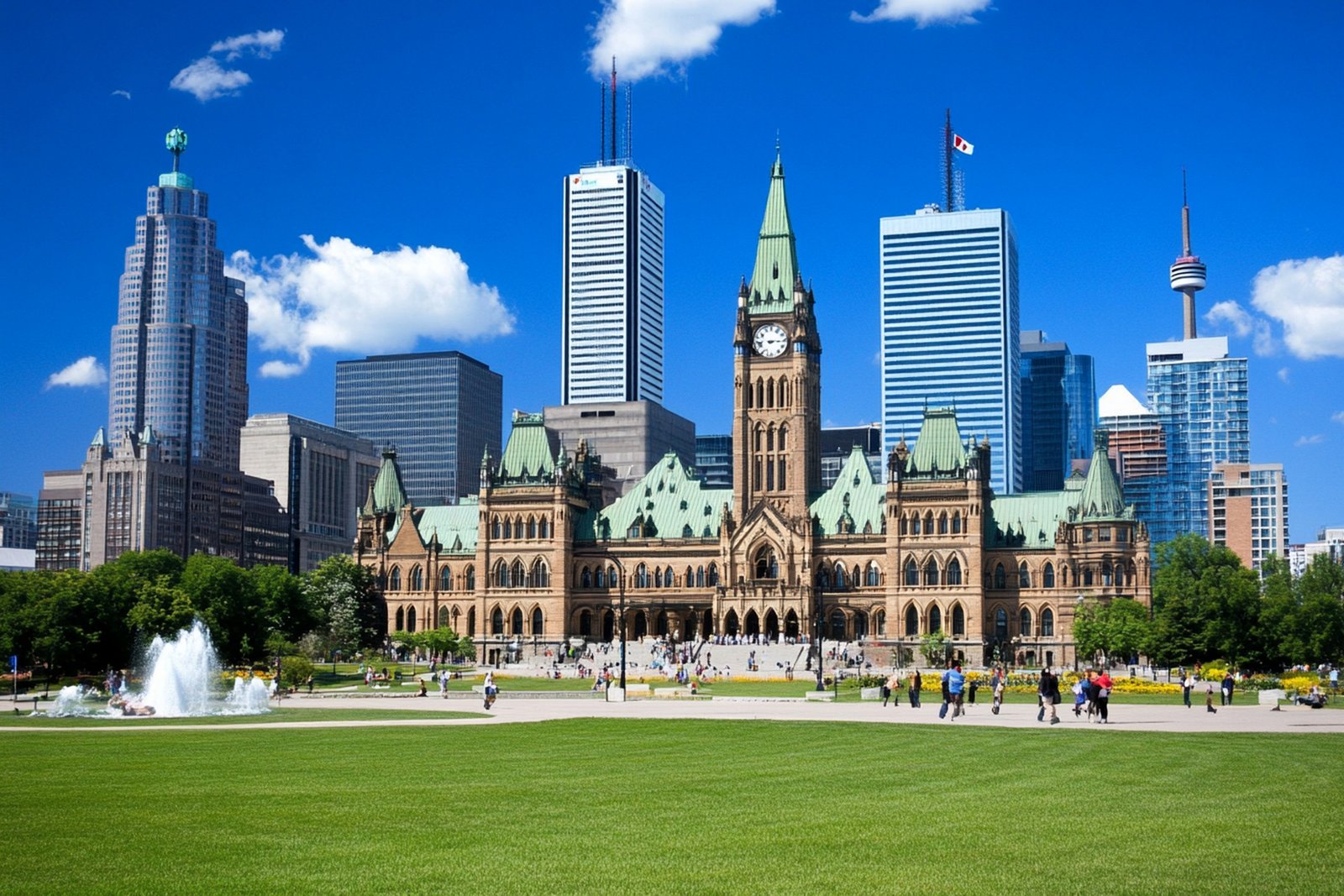
Parliament Hill is the obvious first priority for most groups. Guided tours of the Centre Block are available when the building is accessible (the Centre Block reopening timeline has affected tour availability in recent years — check current status when planning). The exterior of Parliament Hill, the Peace Tower, and the grounds are accessible year-round and are genuinely impressive. The Changing of the Guard ceremony on the Hill runs in summer and is worth timing the arrival to see.
The National Gallery of Canada holds one of the strongest permanent collections of Canadian and international art in the country, housed in an architecturally significant building near Parliament Hill. For arts-oriented groups, the Gallery easily occupies two to three hours. For mixed groups with varying art interest, a ninety-minute visit touches the highlights without exhausting patience.
The Canadian Museum of History in Gatineau, accessible by a short walk across the Alexandra Bridge from Parliament Hill, has one of the most impressive museum buildings in Canada and a permanent collection covering Canadian history from pre-contact to the present. The Grand Hall alone justifies the short crossing.
The ByWard Market is the practical and enjoyable choice for a group lunch. The indoor market has food stalls, and the surrounding streets have a high density of restaurants in a walkable area that includes the Rideau Centre for any shopping interest.
School and university groups with curriculum connections to Canadian history, government, and national institutions are the most consistent Ottawa charter bookings. The Parliament visit, in particular, is curricular programming that cannot be replicated in Toronto — the physical reality of the House of Commons, the Senate chambers, and the parliamentary grounds is genuinely different from reading about it.
Cultural and heritage groups — historical societies, service clubs with national affiliations, veterans' organizations, Confederation-related commemorative groups — travel to Ottawa for reasons specific to their organizational identity. Charter bus travel for these groups is often the most practical option given the distances involved across the membership.
Corporate groups attending Government of Canada consultations, regulatory proceedings, or federal procurement events sometimes combine professional meetings in Ottawa with a group afternoon at the national institutions, making a full-day charter the efficient solution for the combined purpose.
An Ottawa day trip requires an early start. Departing Toronto at six or six-thirty in the morning reaches Ottawa by ten-thirty or eleven, providing a full day before a four or four-thirty departure for the return. This is a long day — sixteen to seventeen hours door to door — and the charter bus is what makes it manageable. Without the comfort of the coach on both ends, the journey would be prohibitive.
Transnet Canada recommends the 56-passenger full coach for Ottawa day trips given the duration of the drive. The washroom is particularly important for this length of journey, and the reclining seats and climate control make a meaningful difference on a full driving day. Contact Transnet Canada with your group size and proposed date to receive a quote and confirm availability for this route.