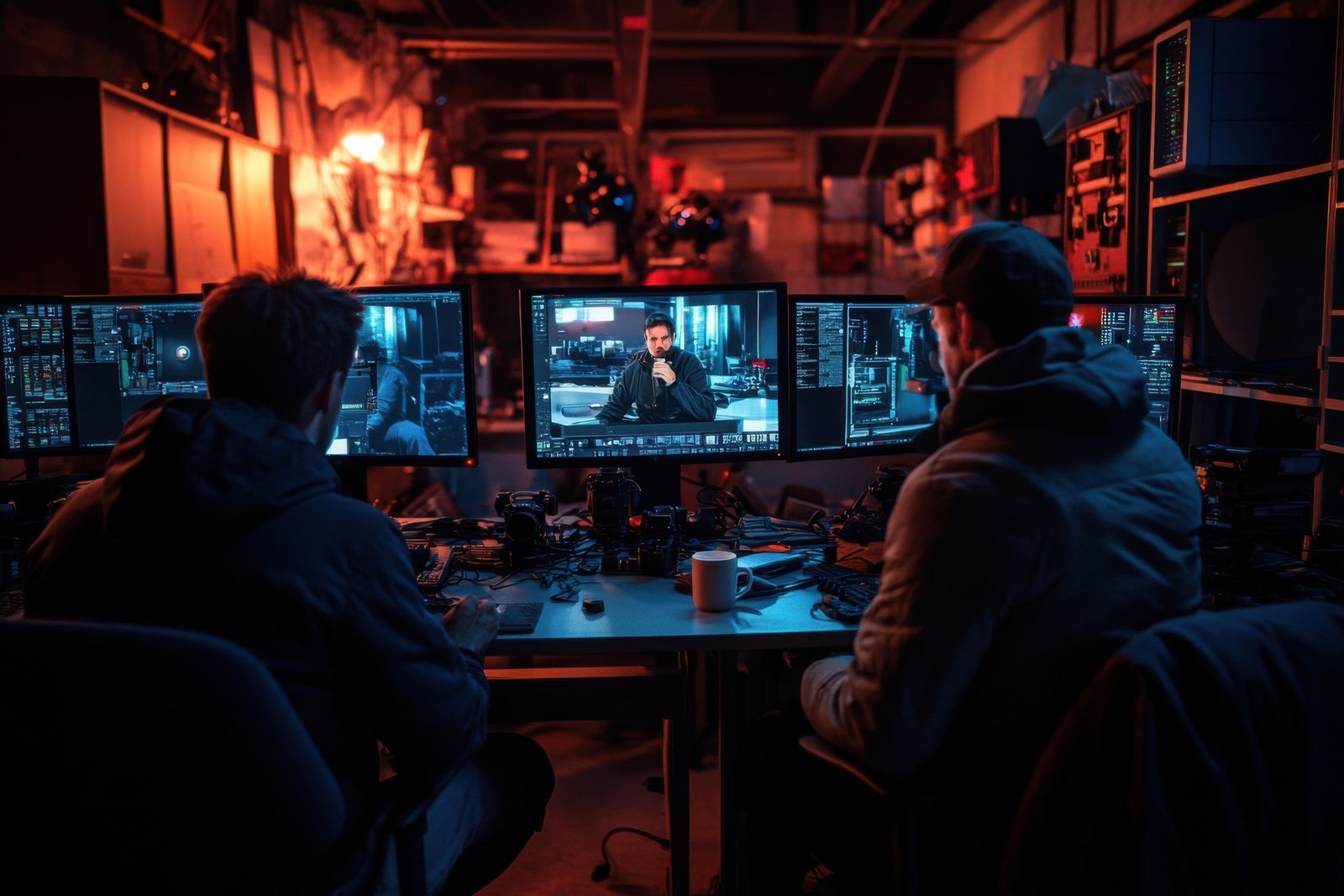
Toronto is one of North America's busiest production centres, and the physical logistics of that industry are largely invisible to anyone outside it. Behind every location shoot is a base camp somewhere nearby, a parking arrangement negotiated with a municipality or a property owner, and a set of vehicles moving people between the two on a schedule dictated by a call sheet.
Production transportation is unlike most group charter work in one fundamental respect: the schedule is not a plan, it is a financial instrument. A crew standing idle because a shuttle was late costs the production the full loaded rate of everyone standing there, and that number scales quickly.
The most common production transportation requirement is the loop between base camp and set. Locations rarely have parking for a full unit — a downtown street, a residential house, a park, a heritage building — so the trucks, trailers, and crew parking sit somewhere within a few kilometres and people shuttle in.
This is high-frequency, short-distance work with a strong emphasis on reliability. A shuttle running a continuous loop across a twelve or fourteen-hour day needs a driver who understands that departure times are firm and that the unit's rhythm depends on the vehicle being where it is expected to be.
Vehicle size varies with the production. A commercial shoot might need a fourteen-passenger minibus. A feature or series unit frequently runs multiple vehicles simultaneously — one for crew, one for background performers, sometimes a separate vehicle for cast.
Scenes requiring large numbers of background performers create a distinct transportation event: moving eighty or a hundred and fifty people from a holding area to set and back, often several times across a shooting day.
The holding area is typically a hall, a gymnasium, or a tented area some distance from the location, and background is called to set in waves as the scene requires. Coaches work well here because the capacity matches the group size and the loading is fast. Transnet Canada handles these movements for productions across the GTA, coordinating directly with the third assistant director or the background wrangler managing the calls.
Production days run long. A twelve-hour shooting day plus pre-call and wrap frequently extends the transportation window past fourteen hours, and that runs directly into commercial driver hours of service limits.
These limits are not negotiable and not a matter of the driver's willingness. Ontario and federal regulations cap daily driving time and on-duty time and require minimum off-duty periods. A production planning a sixteen-hour transportation day needs either a driver change or a second vehicle, and that has to be arranged in advance rather than discovered at hour thirteen.
Transportation coordinators working with Transnet Canada get a clear statement of the hours a single driver can cover and a plan for what happens beyond it. This is not a limitation we hide until it becomes a problem.
Productions operate on permits, and those permits come with conditions about where vehicles may park, idle, and stage. Residential locations in particular involve commitments to the neighbourhood about noise and vehicle presence that a production works hard to honour, because a complaint can jeopardize the location.
Drivers working production need to understand this. Where to stage, where not to idle, how to approach a narrow residential street with a fifty-foot vehicle, and when to shut the engine off are all part of the job rather than incidental to it. Anti-idling bylaws apply in most GTA municipalities and productions are visible enough that enforcement finds them.
Productions frequently operate under working titles and have real concerns about location leaks, cast movements, and set photography. Drivers working these jobs may sign non-disclosure agreements, and the professional expectation is that nothing about the production, its cast, or its locations is discussed outside the job.
Transnet Canada treats this as standard practice for production work and our drivers understand the expectation before they arrive on the first day.
Production transportation is rarely a single-day booking. The typical arrangements are a block booking across a shooting schedule, a daily rate with a guaranteed minimum, or an ongoing arrangement across a full production run.
Schedules change — weather days, location swaps, and schedule compression are routine — so flexibility in the booking terms matters more here than in most charter work. Transnet Canada structures production agreements with that reality built in.
Transportation coordinators and production managers can contact Transnet Canada with the shooting schedule, unit size, and location plan. We will provide vehicle options, driver coverage across the shooting day, and a rate structure appropriate to the length of the engagement.